
Rethinking Leadership Through the “Sailing Boat on the Lake” Metaphor
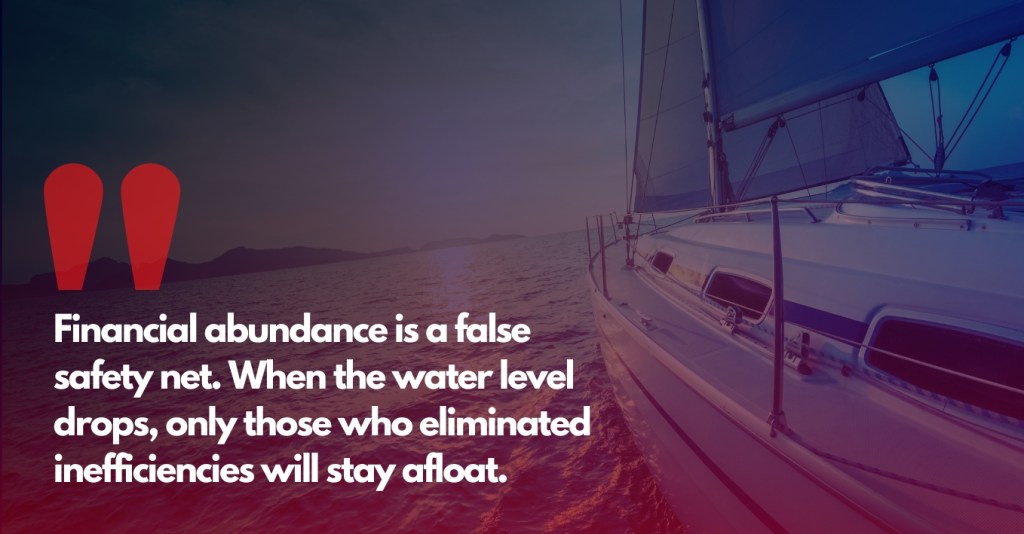
American industry has thrived on capital abundance, relying on bigger factories, more automation, and constant financial injections to sustain growth. When the water level drops, inefficiencies that were once hidden become painfully visible—and many businesses find themselves struggling to stay afloat.
Watch More Videos on Attitude Feelings TV
Industry leaders don’t just adapt—they execute with precision. At Attitude Feelings TV, you’ll find powerful videos on industrial leadership, operational excellence, and business transformation—giving you the strategies you need to stay ahead in today’s competitive landscape.
Now, let’s break it down in detail—read the full article below!
22 Years Navigating the Challenges of Global Industry
For over 22 years, I have worked inside the engine rooms of industrial giants—leading high-stakes turnarounds, managing large-scale operational transformations, and helping businesses navigate the complexities of a rapidly changing global market. My career has taken me across multinational corporations, multi-site operations, and billion-dollar enterprises, exposing me to vastly different management philosophies.

As a C-Level executive, industrial engineer, and Black Belt in Lean Six Sigma, I have led business transformations across multiple continents—from North and Latin America to Europe and Asia. I have witnessed the unique strengths and weaknesses of each culture’s approach to leadership, efficiency, and industrial execution.
One truth became clear: executive mindset dictates success or failure more than any other factor. The way leaders think, adapt, and respond to challenges defines whether a company will scale efficiently or collapse under its own inefficiencies.
Throughout my career, I have seen companies rise and fall based on leadership mentality, not just external market conditions. In every industry I’ve worked in—automotive, frozen food, textiles, fertilization, and industrial engineering—I have observed patterns in how different regions approach efficiency, execution, and competitiveness.
- Asian cultures, particularly in Japan, are rooted in the principles of Lean Manufacturing. They have historically operated in resource-constrained environments, forcing them to do more with less—eliminating waste and maximizing efficiency.
- German executives thrive on standardization, process discipline, and consistency. They execute simple, structured solutions with relentless precision rather than relying on complexity.
- American executives, however, have historically been empowered by the abundance of capitalism. Their first instinct when scaling operations is not to optimize but to expand—building bigger factories, investing in more automation, and pouring capital into projects that often scale inefficiencies rather than eliminate them.
The result? While other global economies refine efficiency, American companies rely on capital injections to sustain growth—until the market exposes their vulnerabilities.
This is a leadership crisis—one that I have tackled head-on in some of the world’s largest manufacturing operations. Through my work in corporate restructuring, business turnaround, and process optimization, I have developed a simple but powerful metaphor to break through this mental barrier and challenge industrial leaders to rethink their approach:
The “Sailing Boat on the Lake” Metaphor: A New Way to View Industrial Inefficiency
Imagine a sailing boat navigating across a vast lake. The objective? To cross from one side to the other as quickly and efficiently as possible.
In this metaphor:
- The boat represents your company’s operations.
- The lake’s water level represents the financial capital available to the business.
- The obstacles beneath the water—hidden rocks, sandbanks, and submerged barriers—represent the company’s inefficiencies.
If the water level is high, the boat glides effortlessly across the lake. Any hidden obstacles remain submerged, unnoticed, and irrelevant—allowing the boat to continue its course without disruption.
This is how American industries have historically operated.
Whenever inefficiencies threaten productivity, the default solution has been to “raise the water level”—injecting more money, more resources, and larger investments to sustain the illusion of smooth sailing. Instead of solving the underlying inefficiencies, they throw capital at the problem.
- Need more production? Build a bigger factory.
- Facing operational delays? Buy more automation.
- Experiencing rising costs? Increase prices to compensate.
This mindset works only as long as capital remains abundant. But what happens when the economy shifts?
When market pressures tighten budgets, the water level drops—exposing the submerged inefficiencies that were previously hidden.
- Suddenly, the boat is no longer gliding—it’s crashing against obstacles.
- Every hidden inefficiency, every overlooked process failure, and every bloated expense becomes painfully visible.
- And now, executives have no choice but to confront a reality they had been ignoring.
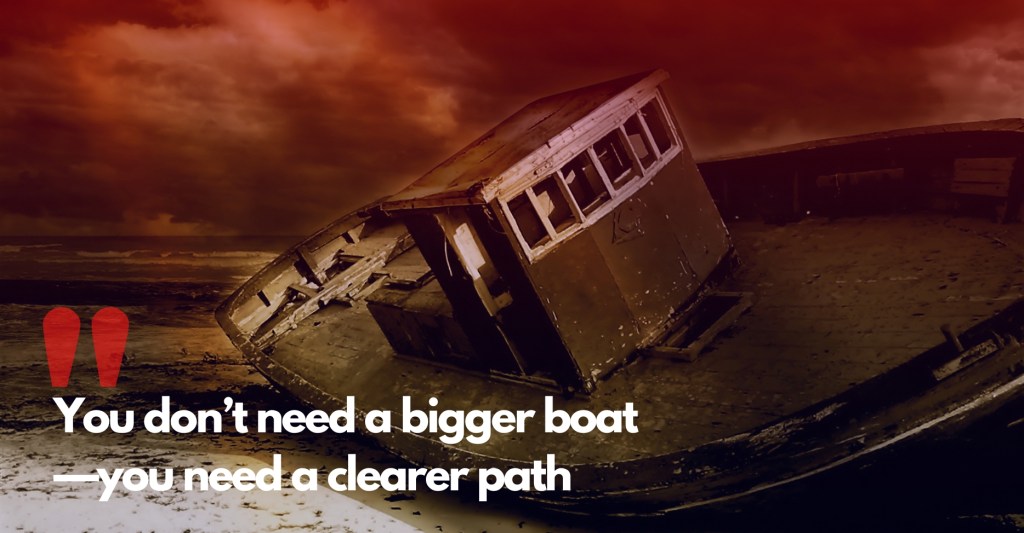
The Reality Check: American Industry is Hitting the Rocks
This is exactly what is happening to American manufacturing today.
For years, the U.S. has been bombarded by an influx of lower-cost, high-quality goods from Asia and other emerging markets. These economies were forced to navigate with lower “water levels”—meaning they could only succeed by eliminating waste, optimizing efficiency, and operating with ruthless precision.
Meanwhile, many American manufacturers scaled their inefficiencies alongside their growth. They ignored the obstacles beneath the surface, trusting that financial resources would always be there to smooth the path forward.
Now the tide is turning.
As global competition intensifies, companies that optimized first are winning. Meanwhile, companies that relied on capital as a crutch are struggling to stay afloat.
The industrial leaders who refuse to adapt will watch their companies sink.
What Needs to Change: Leadership in an Era of Scarcity
To regain global industrial dominance, American executives must shift their mindset from abundance to efficiency.
- Raising capital is no longer enough—optimizing operations is mandatory.
- Scaling a company without fixing inefficiencies will only amplify the problem.
- The most competitive companies are not those with the largest factories but those with the most effective leadership.

Executives must stop asking: 💰 “How much money do we need to fix this?”
And start asking: 🔹 “What inefficiencies must be eliminated before we invest?”
Instead of raising the water level, they must remove the obstacles from the lake bed.
- Before expanding production, streamline processes.
- Before investing in new technology, eliminate operational waste.
- Before increasing output, ensure that existing capacity is fully optimized.
Conclusion: The Leaders Who Will Shape the Future
For years, I have used the “Sailing Boat on the Lake” metaphor to challenge executives—particularly those in American industry who have been conditioned to rely on financial power rather than operational discipline.
The leaders who embrace this new mindset will redefine American manufacturing. Those who continue to depend on capital injections to mask inefficiencies will be left behind.
The truth is, real industrial transformation doesn’t happen when there’s unlimited financial support—it happens when leaders have no choice but to innovate, optimize, and execute.
💡 Are you still raising the water level to hide inefficiencies?
💡 Or are you ready to remove the obstacles and sail faster than ever before?
The future of American industry depends on those who have the courage to challenge the illusion of abundance and build businesses that thrive on efficiency, not excess.
For more insights on high-performance leadership, business transformation, and industrial efficiency, visit Attitude Feelings Co.
By Anderson Waldrich Nunes | Attitude Feelings Co.






 Attitude Feelings