
Elon Musk Defied the Impossible – Why Can’t Your Business?
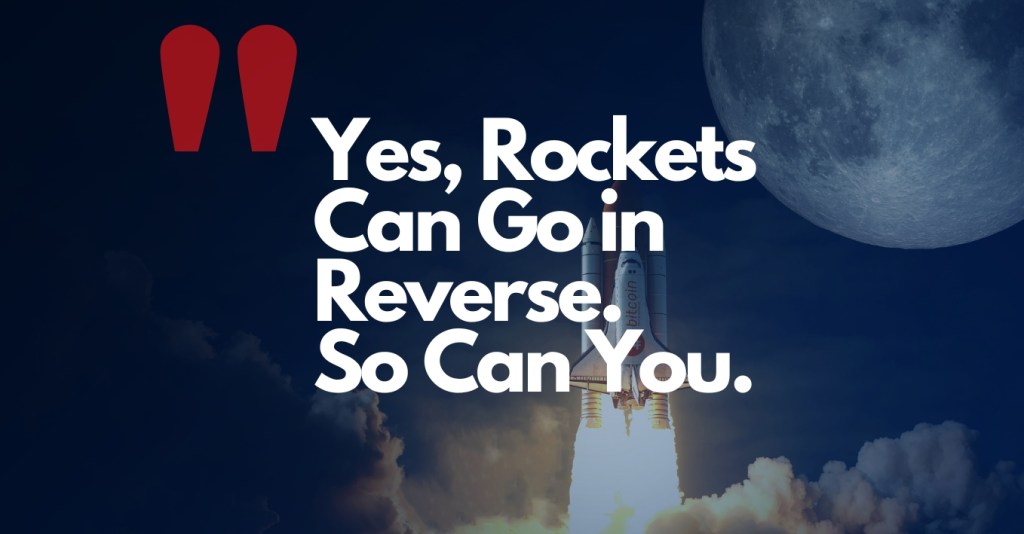
For decades, one truth remained unchallenged: rockets don’t go backward—they only move in one direction.🚀 But then Elon Musk and SpaceX proved the impossible wrong—a fully controlled rocket landed back on Earth, redefining the limits of innovation and execution.
Watch More Videos on Attitude Feelings TV
Industry leaders don’t just adapt—they execute with precision. At Attitude Feelings TV, you’ll find powerful videos on industrial leadership, operational excellence, and business transformation—giving you the strategies you need to stay ahead in today’s competitive landscape.
Now, let’s break it down in detail—read the full article below!
How Elon Musk’s Innovation Mirrors the Leadership Crisis in Modern Industry
Historically, one absolute truth remained unchallenged: rockets don’t go in reverse, rockets only moved in one direction—forward! The idea of reversing course was unthinkable, was a very absurd idea. Once a rocket launches, there’s no turning back—it’s all or nothing.
This belief stood firm, much like the mindset ingrained in many executives and industrial leaders today: “We’ve always done it this way.” “There’s no turning back.” “We can’t change.”
Then, Elon Musk and SpaceX shattered that reality.
A fully controlled rocket returned to Earth, landing precisely where it was meant to. The impossible was redefined, proving that limitations are just mental barriers waiting to be broken.
Now, let’s shift our focus from rockets to the business world.
If we can reverse a rocket, why do so many industrial leaders remain stuck, believing they have no way forward?
The same kind of rigid thinking dominates the corporate world today. Leaders and executives tell themselves the same things:
📌 “This is how we’ve always done it.”
📌 “There’s no turning back.”
📌 “Change is too risky.”
🚀 If a rocket can reverse course, why do so many leaders still believe their industries can’t?
🚀 If we can land a spaceship with precision, why do so many companies still struggle to take control of their own future?
🚀The real obstacle isn’t technology, competition, or the market. It’s mindset.

The Rocket and the Executive: A Leadership Parallel
When I founded Attitude Feelings, the metaphor of the rocket and the astronaut was at the core of my vision. It symbolized the unstoppable force of attitude—the relentless drive to execute and achieve the impossible.
A rocket, like a visionary leader, doesn’t hesitate. Once launched, it commits fully to the mission. There’s no “undo” button.” There’s no waiting for the perfect conditions. It’s either act with courage, or fail before even trying.
Yet, what happens when the game changes?
Elon Musk’s breakthrough redefined what’s possible in space travel. But in the corporate world, many leaders remain trapped in their own outdated beliefs:
📌 “We don’t have the resources to compete.”
📌 “Operational inefficiency is inevitable in manufacturing.”
📌 “The market conditions are against us.”
📌 “We just need more investment to fix our problems.”
The harsh truth? These are mental barriers, not real limitations.
🚀 If a rocket can land itself back on Earth, your factory can regain its competitiveness.
🚀 If a rocket can reverse course, your business strategies can evolve.
🚀 If Musk proved the impossible wrong, so can you.
The Leadership Crisis: Why Factories Stay Stuck While Innovators Soar
Let’s talk about what really holds industrial leaders back.
For decades, American manufacturing thrived under a simple equation: ➡ More money = More machines = More production = More profit.

Need higher output? Expand. Buy bigger factories. Install larger machines. Throw money at the problem, and it will fix itself.
That strategy worked—until it didn’t.
Today, emerging markets like China aren’t winning because they have more money—they’re winning because they optimize first, scale second.
Meanwhile, American industries:
🔹 Scale inefficiencies instead of eliminating them.
🔹 Invest millions in automation without fixing fundamental process failures.
🔹 Focus on cost-cutting instead of operational agility.
🔹 Wait for “better conditions” instead of creating better conditions.
📌 So, the real question is: What will it take for industrial leaders to challenge their own thinking?
📌 If we can reverse a rocket, why are so many companies still unable to reverse their decline?

The Illusion of No Options
I talk to executives, plant managers, and industry leaders every day. And I see the same pattern: Brilliant professionals who KNOW what needs to be done, but hesitate to act.
They understand:
✅ The importance of Lean Manufacturing
✅ The potential of Industry 4.0 and IoT
✅ The power of data-driven decision-making
But understanding is not execution.
They get stuck in the loop of waiting.
➡ Waiting for the perfect budget.
➡ Waiting for a CEO decision.
➡ Waiting for external market changes.
➡ Waiting for the “right time” to optimize their operations.
Here’s the harsh reality: There is no “right time.” The future is built by those who act now.
🚀 If Musk had waited for “perfect conditions,” we wouldn’t have rockets landing back on Earth.
Breaking the Barrier: The Musk Mindset for Industrial Leaders
The truth is, this goes far beyond personal opinion.
You can admire Elon Musk. You can criticize him. You can even hate him. But you cannot deny reality.
He shattered a barrier that for decades was considered impossible.
And he is not the first. Throughout history, industry has been shaped by those who refused to accept limitations:
🔹 John D. Rockefeller revolutionized the oil industry and built the first true industrial empire.
🔹 Henry Ford didn’t invent the car, but he made it accessible to the masses through assembly line production.
🔹 Steve Jobs transformed personal computing, communication, and digital media.
🔹 Bill Gates changed how businesses operate, making software an essential part of every industry.
Each of these leaders faced critics, skeptics, and resistance.
🔹 They didn’t ask for permission to innovate.
🔹 They didn’t wait for the perfect conditions.
🔹 They didn’t accept the status quo.
🚀 Elon Musk did not just land a rocket—he proved that what we believe to be impossible is often just a limitation of our own thinking.
Now, ask yourself:
📌 What “impossible” barriers are holding you back as a leader?
📌 What have you convinced yourself cannot be changed?
📌 Are you leading innovation, or just watching from the sidelines?
🚀 It’s time to adopt the mindset of those who break barriers, not those who are trapped by them.
Because in the end, the difference between industry leaders and industry followers is simple: One group challenges limits. The other obeys them. 👉 Which one do you belong to?
For more high-performance insights on leadership, innovation, and industrial transformation, visit Attitude Feelings Co..
By Anderson Waldrich Nunes | Attitude Feelings Co.




 Attitude Feelings